
Beginner Again at 68
Day One of the Meyerhold Biomechanics Workshop in Ponta Delgada

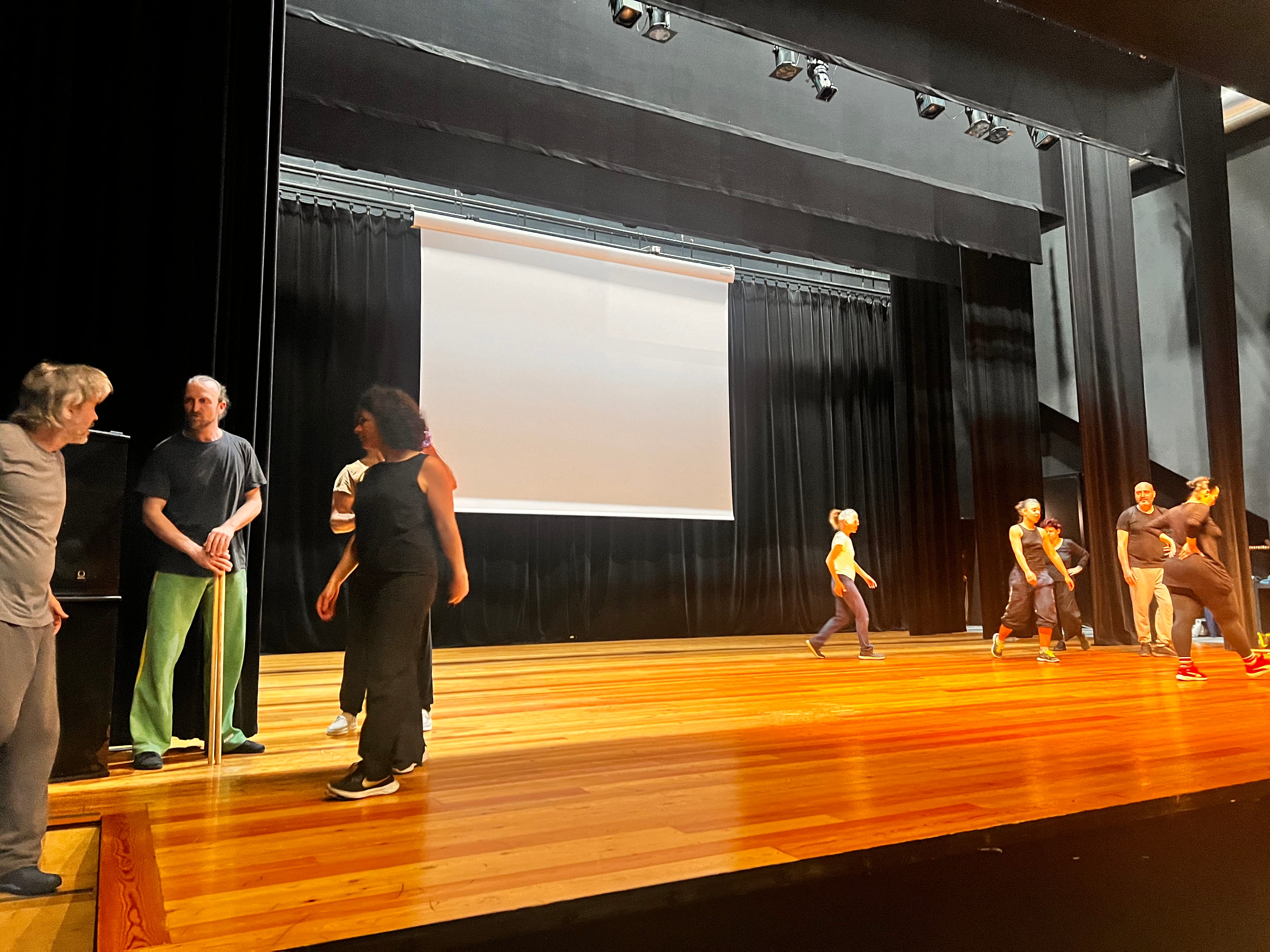
Notes from the Meyerhold Workshop — Day One
A few days ago, I wrote about the strange gift of being able to learn again at sixty-eight, and today that idea stopped being theoretical. It became physical.
This was the first day of a five-day Meyerhold Biomechanics workshop in Ponta Delgada, led by Tony De Maeyer.
Tony is a highly regarded European actor, movement director, and specialist in the theatrical biomechanics system developed by the Russian director Vsevolod Meyerhold. He is the founder of Biomechanics Berlin and has spent nearly three decades studying and teaching Meyerhold’s methods.
What makes De Maeyer particularly significant is that he trained extensively with Gennadi Bogdanov, one of the world’s foremost authorities on Meyerhold’s surviving techniques. Their collaboration began in Berlin in 1996 and became the foundation of De Maeyer’s work as both an actor and teacher.
He has taught at some of the most respected theatre institutions in Germany and Europe, including:
Ernst Busch Academy of Dramatic Arts
Berlin University of the Arts
Academy of Performing Arts Baden-Württemberg
Anton Bruckner Private University
He has also served as movement consultant and biomechanics trainer for major German theatre productions.
Meyerhold Biomechanics is not dance, mime, or traditional acting technique. It is a rigorous physical training system that develops:
Balance
Rhythm
Spatial awareness
Precision of movement
Ensemble awareness
Physical storytelling
The connection between physical action and emotional expression
The famous Meyerhold principle is:
“The whole body participates in every movement.”
The training often involves highly structured movement studies called “études,” which teach actors how intention, preparation, action, and reaction create meaning on stage.
Given my background has touched:
Classical and contemporary acting
Directing
Voice and audiobook performance
Reader’s theatre
Ensemble Studio Theatre traditions
Community-based theatre work in NYC and across America
I found the workshop surprisingly complementary to what I already know.
American actor training often descends from psychological realism through Konstantin Stanislavski and later Method traditions. Meyerhold’s approach asks a different question:
Can physical action generate emotional truth rather than merely express it?
For someone who spent decades working with text, character, and voice, biomechanics can feel like discovering an entirely different doorway into performance. It is often described as training the actor’s instrument from the outside in rather than the inside out.
The fascinating thing is that Meyerhold and Stanislavski were not enemies. Meyerhold actually began as one of Stanislavski’s actors before developing his own radically different theatrical language. Much of twentieth-century physical theatre, from clowning and movement theatre to practitioners such as Jerzy Grotowski and Jacques Lecoq, owes something to the ground Meyerhold broke.
Given my interest in movement work, participatory arts, and the possibility of directing reader’s theatre and community productions in São Miguel, this workshop seemed unusually well aligned with where our creative life is heading right now. It proved less about acting and more about rediscovering the expressive possibilities of the body itself.
That is the background. The experience itself was far more immediate.
Heather and I arrived as part of a group of perhaps fifteen to twenty people, mostly Azoreans of different ages, along with two sisters from Belgium. We appeared to be the only Americans in the room. From the beginning, the atmosphere was attentive, open, and generous. People were ready to work. They were ready to listen. They were ready to look foolish if that was what learning required, which is often the only honest beginning.
The workshop lasted about four hours, and it was intense. I felt it almost immediately. I felt it in my feet, my legs, my balance, my concentration, and eventually in the quiet embarrassment of realizing how long it had been since I had truly asked my body to work as an actor’s body. I have spent a lifetime in theatre, film, voice, teaching, directing, and storytelling, but today reminded me that experience is not the same as readiness. Knowledge can remain in the mind long after the instrument has gone soft.
That was humbling. It was also oddly exhilarating.
Much of what Tony introduced felt both new and familiar. I recognized echoes of things I had encountered over decades with directors, choreographers, movement teachers, and film people, although those pieces had lived in separate compartments in my memory. Blocking. Physical intention. Cueing movement. Preparing the body before action. Letting the body announce something before the mind explains it. The work began to gather those fragments into one larger pattern.
At one point, Tony spoke about movement in relation to force, resistance, and opposition, and I found myself thinking about film acting. When I used to teach actors how to work on camera, I often talked about how the actor’s body can help the camera operator understand that movement is coming. Before you cross the room, before you rise from the chair, before you turn, something has to happen. The camera needs to feel the impulse before the action arrives.
Today I realized that this was not merely a camera trick. It was part of a much larger physical truth. The body prepares. The body gathers. The body resists. The body releases.
That same pattern began appearing everywhere. It appeared in the golf swing. It appeared in anything involving a bat, a club, a ball, a step, a reach, a turn, or a change of direction. Suddenly the workshop was no longer only about theatre. It was about how we move through the world, how we organize energy, how we reveal intention, and how much of life depends on physical awareness we usually ignore.
We worked with stepping, balance, sticks, balls, rhythm, coordination, and carefully structured physical tasks that were simple enough to understand and difficult enough to expose every weakness. I cannot yet describe the technical details with confidence, and I do not want to pretend otherwise. This is only Day One. What I can say is that the work demanded attention from the whole person. It was not exercise in the ordinary sense. It was not choreography in the decorative sense. It was a way of thinking through the body.
Watching Tony teach was its own lesson.
Anyone who has taught artists knows how difficult it is to lead a room filled with different levels of experience, especially when the work is physical and vulnerable. Beginners need clarity, but they also need permission. They need structure, but they also need space to fail without shame. Tony and his assistant handled the room with patience, humor, precision, and respect. There was no condescension in the teaching, and there was no vagueness either. The work was demanding, but the room felt safe enough to attempt it. That balance is rare.
It also made me grateful that this work was happening here, in the Azores. Again and again, since arriving in São Miguel, I have been struck by the depth of artistic seriousness here. It is not always loud. It is not always institutional. It does not always announce itself in the ways I learned to recognize in New York. But it is present. Today, in that room, it was unmistakable.
People showed up. They listened. They tried. They worked.
Heather and I left sore, tired, and strangely happy. We have four more sessions ahead of us, and I suspect that by the end of the fifth day I may understand this first day differently than I do now. At the moment, I feel like an old actor returning to a language he once knew but has not spoken fluently in years.
That may be the real beginning. At sixty-eight, I am not returning to theatre as someone trying to prove what I know. I am returning as someone willing to discover what I have forgotten. Today, I was a beginner again. Tomorrow, sore muscles and all, I'll be back in the room, and begin again.
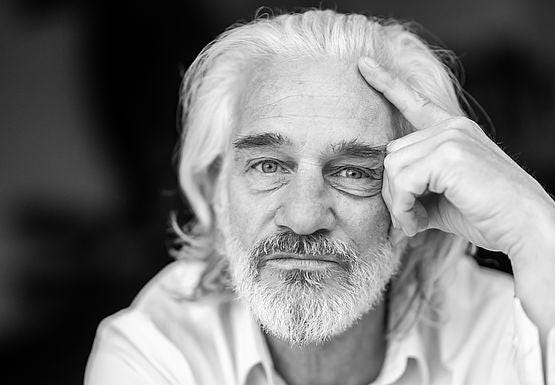
Tony De Maeyer
A few things that stand out now that I’ve spent a day in the room with Mr. De Maeyer:
He is not simply teaching historical Meyerhold exercises.
His life’s work has been adapting biomechanics into a living contemporary acting method rather than preserving it as a museum piece.
He trained directly with Gennadi Bogdanov, one of the most important living links to Meyerhold’s surviving techniques, beginning in 1996.
He has spent decades teaching actors at major European conservatories and state theatres while continuing to work professionally as both an actor and choreographer.
His philosophy appears remarkably practical. He views biomechanics as a contemporary actor’s craft that belongs alongside Stanislavski rather than in opposition to it.
It is really a great workshop! Thanks for capturing day one so well!
Courage and well done