
The Next Atlantic Crossing
Why a rumor about a data center may reveal something much larger about the future of the Azores

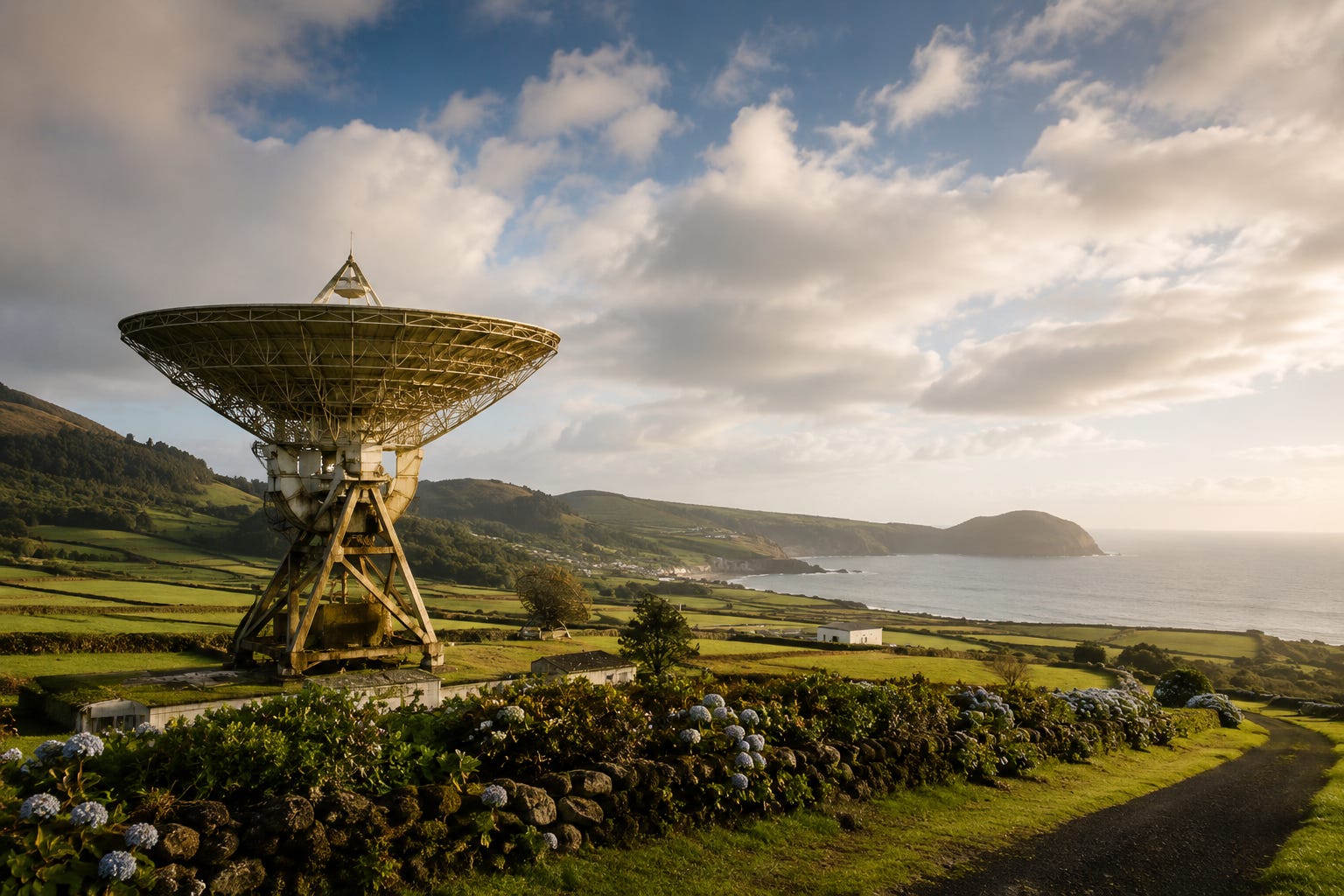
On the outskirts of São Miguel stands an aging Marconi antenna, a reminder that the Azores have spent more than a century helping information cross the Atlantic. Long before cloud computing, satellite networks, and submarine fiber-optic cables, messages passed through these islands because geography placed them between worlds. That history may help explain why a rumor about a data center has captured so much attention.
Depending on who tells it, Google is building a massive data center in Lagoa. The islands are about to become the next Silicon Valley. Tourism is on its way out. Technology is on its way in. Like many rumors, it contains a kernel of truth surrounded by a great deal of speculation. The truth is interesting enough on its own.
Google is currently developing a major telecommunications facility in Lagoa at Tecnoparque. The project will support the company’s new transatlantic submarine cable systems, Nuvem and Sol, creating direct digital connections between the Azores, mainland Portugal, Spain, Bermuda, and the United States. The facility is expected to function as a cable landing station and communications hub within Google’s global network.
Whether one chooses to call it a data center or a cable landing station depends somewhat on the definition being used. The distinction matters because a cable landing station serves a different purpose than the enormous hyperscale data centers found in places such as Virginia, Dublin, or Sines. The facility in Lagoa appears to be focused primarily on routing and managing data moving across the Atlantic rather than housing endless rows of cloud servers.
Yet the technical details are only part of the story. What captured my attention was not the project itself, but the reaction to it. People immediately began asking larger questions. What does this mean for the islands? Will there be jobs? Will young people have more reasons to stay? Will housing become even more expensive? Is tourism being replaced by technology?
The available evidence suggests that tourism is not going anywhere. The Azorean economy remains deeply connected to tourism, agriculture, and the sea. What appears to be emerging instead is an effort to add another pillar to that foundation.
For centuries, the Azores have occupied a strategic position in the middle of the Atlantic. Ships stopped here. Later, aircraft stopped here. Undersea telegraph cables passed through here. Weather stations, military installations, and communications networks all recognized the value of geography. The islands have always been important because of where they are.
In many ways, the digital age is rediscovering the same truth. The internet travels through physical cables laid across ocean floors. Satellites require tracking stations and communications networks. Data moves through real infrastructure built in real places. As technology becomes more global, the Atlantic once again becomes strategically important, and the Azores sit almost exactly where several worlds meet.
This realization extends beyond Google’s investment. On Santa Maria, Portugal has been developing its ambitions in the space sector through the Santa Maria Space Hub. Discussions about satellite operations, launch facilities, and aerospace research have gradually become part of the conversation. At first glance, a spaceport on one island and a cable landing station on another may seem unrelated. Yet both projects emerge from the same reality.
The islands occupy valuable territory in an increasingly connected world. Whether this ultimately benefits ordinary Azoreans remains an open question.
Technology infrastructure rarely creates the same volume of jobs as tourism or agriculture. A major communications facility may employ dozens of specialists where a hotel industry employs thousands. The larger economic impact comes from what follows. Improved connectivity can attract new businesses, research partnerships, cybersecurity firms, network operations, and remote workers. Universities may develop new programs. Young people who once felt compelled to leave might discover opportunities closer to home.
The optimistic version of the future sees the Azores becoming more prosperous while retaining the qualities that make the islands distinctive. There is another possibility as well.
Across the world, technology investment has often been accompanied by rising housing costs, growing inequality, and communities struggling to keep pace with change. Residents of places such as Dublin, Austin, Lisbon, and San Francisco have experienced both the benefits and the burdens of rapid growth. Increased prosperity does not automatically distribute itself evenly.
The Azores already face some of these pressures. Housing has become more expensive. Foreign buyers continue to discover the islands. Remote workers arrive with incomes that often exceed local wages. The challenge for the coming decades may have less to do with attracting investment than with ensuring that local people are prepared to participate in the opportunities it creates.
If education, training, and public policy evolve alongside technological development, the benefits may spread widely throughout the community. If they do not, the most significant gains may flow elsewhere. What makes the current moment fascinating is that none of this is inevitable.
The islands are still early in the process. The Google project is real. The space initiatives are real. The growing interest in Atlantic infrastructure is real. Yet the future remains unwritten. When people speak about the Azores, they often focus on tourism, volcanic landscapes, whale watching, and green hillsides descending into the sea. Those things remain central to the identity of the islands and likely always will.
At the same time, something quieter may be taking shape beneath the surface. A century ago, the Azores helped connect continents through ships, aviation routes, and communications networks. The next Atlantic crossing may travel through fiber-optic cables, satellites, and digital infrastructure.
If that proves true, Lagoa’s new facility may eventually be remembered as something more than a construction project. It may mark the beginning of another chapter in the long history of islands whose greatest resource has always been their position between worlds.
Sources & Further Reading
Government of the Azores. Announcements regarding Google’s investment in telecommunications infrastructure at Tecnoparque da Lagoa and the strategic role of the Azores in transatlantic communications.
Google. Information regarding the Nuvem and Sol transatlantic submarine cable systems connecting North America, Europe, Bermuda, and the Azores.
Submarine Networks. “Google Builds Lagoa CLS in the Azores.” Industry reporting on the Lagoa Cable Landing Station project and the Nuvem and Sol cable systems.
https://www.submarinenetworks.com
Data Center Map. Technical overview of the Lagoa facility, including reported specifications, location, and infrastructure details.
Portugal Space Agency (Portugal Space). Information on the Santa Maria Space Hub and Portugal’s growing aerospace initiatives in the Azores.
Government of Portugal. Announcements and policy statements concerning investment in the Santa Maria Space Hub and Atlantic technology infrastructure.
SubTel Forum. Analysis of Portugal’s strategy to position itself as a transatlantic data, connectivity, and digital infrastructure hub.